What do frogs Represent Spiritually Meanings of Frogs in Various Cultures

What do frogs Represent Spiritually Frogs have deep spiritual meanings in many cultures over time, standing for change, transformation, and new life. Frogs go through an incredible process of transformation. They start as eggs, become tadpoles, and finally grow into adult frogs that can live on land or in water. This journey shows us the beauty of change, a concept highlighted by Marcella Kroll and Inbaal Honigman. The term ‘frog stands’ reflects this symbol of growth in Native American tales, pointing to the broader spiritual meanings of the frog across cultures.
A female frog can lay as many as 4000 eggs in one day, speaking to the ideas of abundance and fast growth. In ancient Egypt, frogs were seen as symbols of birth and fertility. Expectant mothers wore frog charms to bless their pregnancies. In China, the three-legged money frog is a sign of wealth and good luck. For the Navajo and Zuni tribes in the Americas, frogs embody health and bring rain, representing spiritual renewal and life force.
Today, as frogs face danger from environmental threats like pollution and climate change, they stand for overcoming challenges. More than 100 types of frogs and toads are at risk of disappearing forever. Yet, their story offers us hope for the future. Their spiritual meaning helps us see their importance in both culture and nature, reminding us of the need to protect them.
What do frogs Represent Spiritually Frogs symbolize transformation and personal growth.
In ancient Egyptian culture, frogs were deeply linked to fertility
Chinese culture associates frogs with prosperity and good fortune.
Native American tribes view frogs as healers and rainmakers.
Frogs represent ecological resilience amid climate change
More than 100 amphibian species are endangered due to environmental challenges
The cultural symbolism of frogs varies significantly across different societies.
Introduction to Frog Symbolism
Frog symbolism runs deep, showing us many symbolic meanings and spiritual ties across various cultures. For over 200 million years, frogs have lived, evolved, and coped with different worlds. Their long history shows their strength, a quality admired by many.
Frogs’ ability to lay up to 20,000 eggs highlights their link to fertility. Many cultures see them as symbols of new life. For instance, the Aztecs tied them to Chalchiuhtlicue, a water goddess, and in Egypt, frogs symbolized the start of each new year from the Nile’s floods.
From tadpole to adulthood, a frog’s life is a story of change. This journey is a symbol of personal and spiritual growth. Over time, cultures like the Aztecs began to see frogs as cosmic figures, even deities.
For Native American tribes like the Chippewa and Pueblo, frogs are spiritual beings. They bridge the divide between water and earth, symbolizing growth and renewal. These traditions also highlight the need for ecological protection, given today’s environmental challenges.
Frogs’ colors and abilities add more layers to their symbolism. For example, green frogs stand for luck and growth, grey ones for adaptability. Brown frogs, like dendropsophus microcephalus, can actually change their color. This ties them to ideas of adaptation and transformation.
There’s scientific evidence of frogs’ long history and adaptability. For example, a 40-million-year-old frog fossil is found in Antarctica. Such discoveries show frogs’ ancient past and their ability to evolve. This extends into the spiritual realm, reflecting the idea of overcoming life’s challenges.
In the end, frog symbolism reaches into both environmental and cultural aspects. It remains important in many societies, highlighting endurance and spiritual development. Frogs teach important lessons about staying strong, adaptable, and growing spiritually.
Theme | Symbolism | Example |
|---|---|---|
Fertility | Reproduction, abundance | Aztec and Egyptian myths |
Transformation | Metamorphosis, personal growth | Tadpole to adult frog |
Resilience | Adaptability, survival | 40-million-year-old fossils |
Luck and Prosperity | Good fortune, wealth | Green frog symbolism |
Frog Symbolism in Ancient Egypt
In ancient Egypt, frogs were very important to the ancient Egyptians and their religious practices. They were linked to Heqet, the goddess with a frog’s head. Egyptian gods played a significant role in ancient Egyptian religion, with Heqet being seen as the goddess of birth. Frogs were special because they reproduced quickly. This connected them to the process of new beginnings and renewal each year.
The Role of Heqet
The frog-headed goddess, Heqet, was key in Egyptian stories. She was considered the female counterpart of Khnum and played a significant role in fertility. Expectant mothers wore frog-shaped amulets. They believed this would help them have a safe birth. The link between frogs and new life was very strong in Egyptian tales and beliefs.
Fertility and Rebirth
Frog symbolism wasn’t just about Heqet. It spread across Egyptian culture, celebrating frogs for fertility and rebirth. When the Nile flooded, frogs would appear in huge numbers. This acted as a sign of new life and a promise of a good harvest. Frogs also held significance in burial sites, where they were often included as symbolic representations in funerary practices, reflecting beliefs about the afterlife.
Frogs were seen as more than simple creatures. They were spiritual symbols of abundance. The word “hefnu” described large numbers, like 100,000. This showed how much Egyptians valued and respected the frog’s role in their culture.
Aspect | Description |
|---|---|
Heqet | Frog-headed goddess of fertility, associated with childbirth |
Amulets | Worn by pregnant women to invoke the favor of Heqet |
Flooding of the Nile | Mass appearance of frogs symbolizing fertility and renewal |
Hefnu | Word denoting “an immense number,” linked to frogs |
Frogs in Native American Culture

In Native American traditions, frogs have a deep spiritual meaning. The spiritual energy of the frog encourages individuals to embrace change and renewal. They stand for change and a fresh start, much like people who grow and change over time. This symbolism is key in many Native American cultures, where frogs are seen as symbols of new beginnings.
Rainmakers and Healers
In Indigenous cultures, the spiritual meaning of frogs often ties them to rain and healing. The Navajo see frogs as water deities who bring both life and potential harm. For the Zuni and other Puebloan peoples, frogs are linked to important spiritual beings, showing their power to heal.
The toad, related to the frog, symbolizes water and emotions. This shows up near water, highlighting its role in cleaning and healing emotional wounds.
Frogs and toads symbolize a balance between male and female energies in Native American beliefs.
States like *Aquamarine* are linked to toads due to their ability to calm and enhance communication, which mirrors emotional healing.
Clans and Totem Animals
The frog spirit animal is a key part of many clans in Native American cultures. Groups like the Chippewa, Zuni, Pueblo, and Tlingit tribes have Frog Clans with unique spiritual views. These clans honor frogs for their links to wealth, abundance, and protection.
Haida people carve frog symbols on house posts to keep the homes stable.
The community has exchanged frog charms and jewelry for a long time, representing creativity and balance.
Items like masks and bracelets from the Pueblo nations often include frog symbols, showing their importance in their culture.
Gemstone | Properties | Symbolism |
|---|---|---|
Aquamarine | Calming, Clear Communication | Emotional Healing |
Serpentine | Shedding Old Patterns, Balance | Transformation and Equilibrium |
Native American frog symbols mean more than just images. They’re a core part of Native American spiritual and cultural life. From bringing rain to healing, from clans to totem animals, frogs teach about balance, change, and wisdom.
Frog Symbolism in Chinese Culture
In China, frogs symbolize prosperity and good luck. Frogs are also considered important spirit animals in Chinese culture and other societies, symbolizing transformation, cleansing, and renewal. They are deeply tied to traditional ideas. Their role is thought to boost wealth and overall health.
The Three-Legged Money Frog
The three-legged money frog is a well-known symbol in Chinese culture. Also called Ch’an Chu, it brings wealth and protects money. Businesses and homes place statues of Ch’an Chu to attract prosperity.
This frog’s story goes back to Liu Hai, a ancient official. He used gold coins to catch a magical frog with three legs. This added to the frog’s myth as a symbol of wealth.
Good Fortune and Luck
Ch’an Chu plays a big part in bringing good fortune. During the Dragon Boat Festival in May, it is used to repel sickness and attract luck. Many wear bracelets made from protective thread during this festival.
In traditional Chinese medicine, frogs have been considered medicinal. Their eye secretions were once used to treat heart diseases.
Frogs are also important in Chinese sayings and stories. Sayings like “a frog down a well” warn against having a narrow view. Stories about frogs and immortality connect them to the moon, adding to their symbolism.
Frog Symbolism in Central and South American Cultures

In the mythologies of Central and South American cultures, frogs play a big part. Frogs are often featured in fairy tales and myths, symbolizing transformation and renewal. This is especially true for the Aztecs and Mayans. They connected frogs with water and rain, which are key for life and success there. The link between frogs and water gods shows just how deep their spiritual meaning goes.
Aztec and Mayan Beliefs
The Aztecs and Mayans deeply respected frogs in their myths. For the Aztecs, frogs were tied to stories about Tlaltecuhtli, who looked like a frog. This figure symbolized the earth and controlled life-giving water. Meanwhile, Mayan stories saw frogs as linked to creation and fertility, often featuring them in tales about their rain deities.
Rain and Renewal
Rain and renewal are key in the stories about frogs. They are seen as bringers of rain. This makes them important for life and for starting new cycles. Their connection to rain is crucial for feeding crops and communities.
The Aztecs and Mayans deep spiritual connections show us how important frogs were. They were seen as symbols of life, underlining their crucial role in the natural and spiritual order.
Frogs in Australian Aboriginal Culture
Frogs are key in Australian Aboriginal culture, symbolizing important values like unity and stability. They are closely linked to water, making them vital for life. This connects deeply with Aboriginal spiritual stories.
Mythological Significance
Frogs are central to Aboriginal myths and morals. They often bring water in these stories, supporting all life. Their mythological significance shows how crucial they are for the environment’s health.
Water and Survival
In Aboriginal beliefs, frogs and water are fundamental for life and spirituality. They keep a balance between land and water, helping communities thrive. This view highlights frogs as nature’s protectors.
Cultural artworks often show frogs. They focus on their special features, like big eyes. This adds to the spiritual meaning of frogs, as they are seen as messages from the environment.
Frogs are known as powerful symbols for transformation, resilience, and prosperity. They’ve existed for over 370 million years, adapting and thriving. They bridge the gap between our physical and spiritual worlds.
Frog encounters can be life-changing. They remind us that evolution is part of life. Different colored frogs bring various messages. Green frogs bring luck, red ones signify courage, and blues speak of wisdom.
Frogs teach us about adapting to different environments, much like their own journey from ancient times. This ability is key in the natural world and life in multicultural societies. They symbolize the power to integrate into different cultural backgrounds.
Their life cycle shows metamorphosis and new beginnings. They lay thousands of eggs and transform into adults, symbolizing growth. Native American cultures honor frogs for their connections to water and life.
In Aztec and Mayan traditions, frogs were linked to fertility deities. Thus, they represent both physical and spiritual nourishment. They have been essential in global spiritual stories.
Color of Frog | Symbolism |
|---|---|
Green | Good Luck, Prosperity |
Red | Fire, Courage, Power |
Blue | Wisdom, Patience, Communication |
Yellow | Good Omens, Abundance, Intelligence |
White | Innocence, Purity |
Black | Protection, End of a Cycle |
Understanding frog spirituality deepens our respect for these creatures. They’re more than symbols of change, they’re guides for a mindful and adaptable life.
Frogs in Hinduism
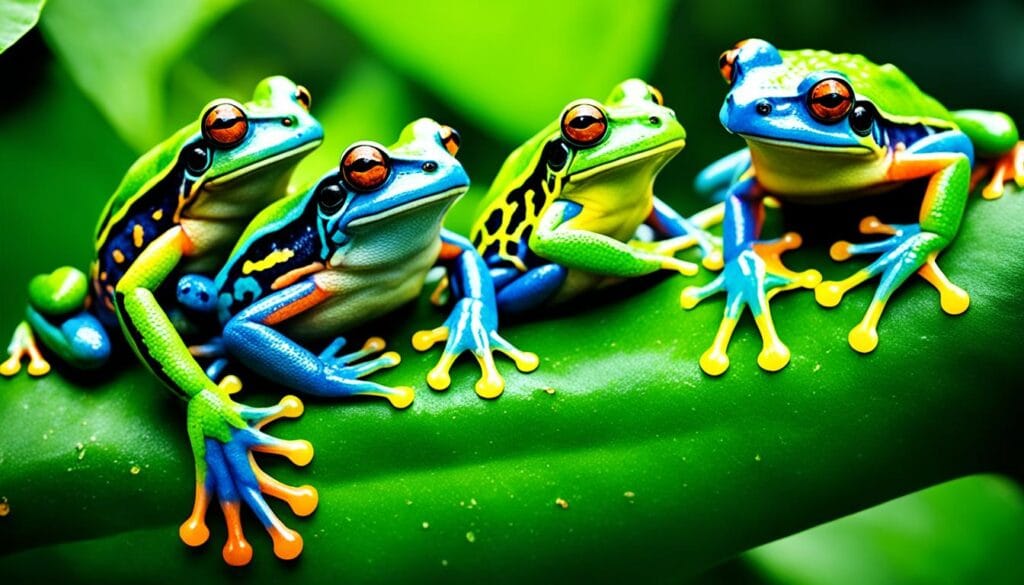
Frogs are valued in Hinduism. They symbolize transformation, fertility, and purity. Hindu spiritual views on frogs point out their part in life’s cycles. This links to Hindu beliefs about the environment and spirituality.
For example, frogs often represent fertility. This is shown in rituals like frog weddings. These ceremonies aim to bring rain by honoring Lord Indra. They are common in places like Assam, Karnataka, Tamil Nadu, Uttar Pradesh, and Madhya Pradesh.
In Uttar Pradesh, there’s a unique temple. It is devoted to a frog and Shiva. This temple shows the deep respect for frogs in Hindu culture. The frog symbolizes change and rebirth. It also highlights the urgent need to protect amphibians from extinction caused by climate change and other threats. Frogs face major risks, making them the most endangered group of vertebrates.
This temple and its worship show the deep connection between frogs and Hindu spirituality. It highlights the importance of ecological balance. By such acts and beliefs, Hinduism shows a circular view of life and nature’s interconnectedness.
The Deeper Meaning of Frogs in Spirituality
In spirituality, frogs symbolize transformation, purity, and divine judgment. They are found in many religious texts, being powerful symbols. These texts come from various belief systems, showing how universal their symbolism is.
In certain Christian narratives, frogs are associated with plagues and are mentioned as emerging from the mouths of ominous figures, including the ‘false prophet’. This reflects the negative connotations of frogs within these religious texts, contrasting with more positive cultural representations in other myths.
Transformation and Metamorphosis
What’s amazing about frogs is their life cycle. They start as tadpoles, then grow into amphibians. This journey mirrors personal growth and spiritual rebirth. The spiritual transformation symbolized by frogs encourages change, leading to a better self.
Purity and Cleansing
Frogs also stand for purity and cleansing. In the Bible’s book of Leviticus, they’re seen as unclean. Even so, frogs still represent avoiding bad influences and reaching for spiritual purity. The frog’s role in issues of impurity highlights our constant need for spiritual cleaning.
spiritual and biblical realms, frogs play a big role. They were part of the Ten Plagues of Egypt and are symbols in Christian texts. By looking at the change symbolized by frogs, we learn valuable spiritual lessons. These insights help us advance towards enlightenment and a fresh start.
The Meaning of Seeing a Frog Spiritually
Seeing a frog spiritually can have a profound impact on one’s life. In many cultures, frogs are considered a symbol of transformation, growth, and renewal. When a frog appears in your life, it may be a sign that you are on the verge of a significant change or transformation. This change can be related to your personal life, career, or spiritual journey.
In ancient Egyptian mythology, the frog was associated with the goddess Heqet, who was revered as a symbol of fertility and rebirth. Similarly, in Chinese culture, the three-legged money frog, Ch’an Chu, is believed to draw or protect the owner’s riches. These cultural symbolism and associations can provide insight into the spiritual meaning of seeing a frog.
When a frog appears in your life, it may be encouraging you to embrace change and transformation. The frog’s life cycle, from egg to tadpole to adult, is a powerful symbol of personal growth and transformation. The frog’s ability to jump and leap can also be seen as a symbol of spiritual freedom and liberation.
The Frog as a Good Omen
In many cultures, frogs are considered a good omen, signaling prosperity and good fortune. In ancient Egypt, frogs were associated with fertility and rebirth, and were often depicted in art and literature as a symbol of abundance and prosperity.
In Chinese culture, the three-legged money frog is believed to bring good luck and prosperity to those who possess it. Similarly, in many Indigenous cultures, frogs are considered a symbol of good luck and prosperity, and are often associated with the spirit world.
When a frog appears in your life, it may be a sign that good things are on the horizon. The frog’s presence can be seen as a blessing, bringing prosperity and good fortune into your life. However, it’s essential to remember that the interpretation of a frog sighting depends on one’s personal and cultural relationship with frogs.
Frog Spirit Animal and Totem
The frog is a powerful symbol for adapting and thriving through change. It brings qualities like empathy and spiritual awareness. These help people grow and find enlightenment.
Characteristics of the Frog Spirit Animal
If a frog is your spirit animal, you may have a strong intuition and care deeply for others. You’re likely a good listener, offering comfort and wise advice. Those around you might feel calmer and healed by your presence.
Frog totem bearers value their families greatly. They create loving homes full of support and care. Their connection with others is both deep and meaningful.
Frogs are also symbols of abundance and fertility because they can lay many eggs. Their dream symbolism often represents the need for focus and dedication. It hints at a journey towards a more committed life.
Calling on the Frog Totem
Engaging with the frog totem aids in welcoming change and seeking personal growth. It helps find clarity during times of transformation. The frog’s influence promotes intuitive wisdom and spiritual healing.
To connect with the frog totem, one might focus on emotional and physical cleansing. Water is essential to the frog and is seen as a purifying force. This process aligns with the totem’s message of resilience and adaptation in difficult times.
Conclusion
What do frogs Represent Spiritually Frogs hold deep spiritual meanings that go beyond borders and touch on universal truths. They are often seen as symbols of change, new beginnings, and spiritual insight. Stories from the Bible, like the one where frogs show divine judgment, or myths from Egypt and Greece linking them to growth and rebirth, all underline their enduring power. Early Christians also used the image of a frog as a symbol of the resurrection of Jesus Christ, drawing from the association of frogs with birth and rebirth.
Frog symbolism teaches us about adapting and growing personally. We can learn from frogs’ change to transform in our lives. This change helps us leave behind the old and become more spiritually aware. It pushes us to seek moral purity and spiritual growth, values shared by many traditions worldwide.
By taking inspiration from frogs, we connect with their ability to survive and their deep wisdom. Following the lessons of frog symbolism, we can aim for a better, more adaptable life. It leads to spiritual clarity, offering a way to flourish in the complex world we live in today.
FAQ
What do frogs represent spiritually?
What do frogs Represent Spiritually Frogs stand for change, new life, and plenty. They show personal and spiritual growth as they grow from eggs. This journey mirrors our own path to success and abundance.
What is the significance of frogs in spirituality?
Frogs hold deep spiritual meaning. They’re symbols of new beginnings and the ability to start fresh. In many traditions, they represent the chance to transform and grow.
How are frogs perceived in different cultures?
Across cultures, frogs mean various things. In ancient Egypt, they were signs of birth. Native Americans saw them as healers. Chinese beliefs connect them to wealth. And in Latin America, they mean change and renewal.
What does the frog-headed goddess Heqet symbolize in ancient Egyptian culture?
The goddess Heqet, with a frog’s head, stands for birth and renewal in Egypt. This association with frogs comes from their link to successful pregnancies. They represent the hope for new life.
How are frogs regarded in Native American culture?
In Native American culture, frogs are special. They are seen as both healers and bringers of rain. They symbolize the life-giving properties of water and are sacred to some clans.
What is the three-legged money frog in Chinese culture?
The Ch’an Chu, or three-legged frog, brings wealth in Chinese beliefs. It’s a popular figure for those wanting to attract fortune. This symbol stands for financial success and safeguards wealth.
How do frogs feature in Central and South American mythologies?
In the myths of Central and South America, frogs are tied to rain gods. They are seen as messengers for rain, signifying life’s renewal and spiritual power.
What is the mythological significance of frogs in Australian Aboriginal culture?
Frogs are key in Australian Aboriginal myths. They represent water, life, and the unity of the ecosystem. They stand for the importance of harmony within nature.
What role do frogs play in Hindu culture?
In Hinduism, frogs are connected to rebirth, change, and purity. They play various roles in Hindu myths, reflecting renewal and the spiritual journey.
How does the transformation of frogs symbolize spiritual metamorphosis?
Frogs changing from tadpoles show spiritual growth. This journey reflects our own quest for personal and spiritual improvement. It encourages us to seek higher awareness.
What are the characteristics of the frog spirit animal?
The frog spirit embodies flexibility and insight. It signifies the ability to navigate life’s changes with emotional wisdom. It guides on a path of spiritual and personal evolution.
How can invoking the frog totem aid in personal growth?
By connecting with the frog totem, one can find advice for self-discovery and spiritual growth. It acts as a mentor in life’s transformations, promoting flexibility and strength through change.

What Does Yellow Mean Spiritually Yellow is a radiant color with rich spiritual meaning: it commonly symbolizes joy, light, and mental positivity. Spiritually, yellow is linked to the solar plexus chakra and the intellect, and is often associated with self-confidence, creativity, and wisdom. Like any symbol, yellow can have a shadow side too—it may represent anxiety, jealousy, or timidity in some contexts. The color appears across dreams, love, personality profiles, and feng shui practices, and when used intentionally in daily life (for example, wearing a yellow scarf, adding a sunny accent pillow, or spending time in sunlight) it can support feelings of energy, learning, and fresh starts. Read on to explore yellow’s cultural history, dream meanings, role in relationships and personality, and practical feng shui uses.
Key Takeaways:Yellow represents joy, light, and mental positivity.
It symbolizes spontaneity, youthfulness, creativity, and wisdom.
Yellow can hold different symbolic meanings in dreams, love, personality, and feng shui.
Bringing more yellow into your life spiritually—through color, light, or decor—can foster action, learning, and new beginnings.
Yellow is associated with the solar plexus chakra, influencing self-worth, authenticity, and confident expression.Yellow Symbolism in History and Culture
Yellow has played an important role across many cultures, carrying layered symbolic meanings that range from material wealth to spiritual light. In ancient religious and court contexts the color often signified opulence, abundance, and prestige—worn by elites or used in sacred art to signal prosperity and divine favor.
Beyond material associations, yellow has long been linked with joy, clarity, and intellectual energy. Like gold or honey, yellow has suggested abundance and pleasure, while also connoting enlightenment, knowledge, and spiritual illumination in a variety of traditions. These meanings show how a single color can bridge earthly prosperity and inner wisdom.
The Symbolism of Yellow in Different Civilizations
Across civilizations, yellow’s meanings adapted to local beliefs and institutions. Below are representative associations that illustrate its cultural breadth:CivilizationSymbolic Meaning of YellowAncient Egypt
Yellow represented the sun, nourishment, and immortality. It was associated with the god Ra, symbolizing divine power and rebirth.Ancient China
Yellow was considered a prestigious color tied to imperial authority and power; it signified royalty, centrality, and prosperity.Ancient Greece
Yellow was connected with gods such as Apollo, associated with light, healing, creativity, and intellectual pursuits.Ancient Rome
Yellow evoked the sun and vitality — a color linked to life force, triumph, and occasionally to divine figures like Apollo.These historical examples show how yellow can mean both worldly abundance and spiritual illumination depending on context. Today the color still appears in national symbols, religious art, and ceremonial dress—a living thread from ancient meanings of prosperity and wisdom to modern expressions of joy and cultural identity.
What Does Yellow Mean SpirituallyThe symbolism of yellow in dreams is personal but often points to positive mental states or important signals from your subconscious. Bright, vivid yellow hues typically suggest joy, clarity, and creative energy, while muted or muddy yellows can carry caution or unease. To interpret yellow in a dream, note the shade, location, and the feelings you experienced—these details help reveal the spiritual meaning behind the color.
Positivity and Contentment
Vibrant yellow often reflects joy, optimism, and a sense of satisfaction in waking life. If you dream of warm, luminous yellow light or sunlit scenes, it can indicate a period of emotional uplift, renewed hope, or growing happiness.
Intellect and Creativity
Yellow is closely tied to the mind and intellect, so dreaming of yellow can signal new ideas, problem-solving breakthroughs, or creative inspiration. A sudden flash of yellow in a dream might mirror an “aha” moment or heightened mental clarity.
Alertness and Awareness
Because yellow attracts attention, it can represent heightened awareness or a prompt to pay attention. Dreams featuring signs, clothing, or objects in yellow may be asking you to notice details or opportunities you’ve overlooked.
Caution or Warning
Faded, sickly, or muddy yellow shades can suggest caution, anxiety, or feelings of insecurity. In these cases, yellow may be urging you to slow down, examine risks, or address unresolved worries.
Quick journal prompts to interpret your yellow dream: What shade of yellow did you see? Where did it appear? How did it make you feel? For example, dreaming of a bright yellow sunflower in an open field likely points to joy and growth, whereas a dim yellow light in a closed room may signal caution or unease. Note the context, trust your intuition, and use these observations to uncover the spiritual meaning of yellow in your dreams.
Yellow Symbolism in Love
In matters of the heart, yellow often signals excitement, hope, and a sunny outlook on relationships. The color evokes the freshness of new romance—the initial spark, curiosity, and the optimistic energy that comes with seeing the world through new eyes. Because yellow is associated with light and warmth, it can bring an uplifting, joyful tone to love and connection.
Yellow can also represent empowerment and activity in relationships: it suggests an openness to growth, playful communication, and the courage to express feelings. Someone drawn to yellow or perceived to have a yellow aura often projects charisma, confidence, and approachability—traits that naturally attract others.
That said, cultural context matters. For example, yellow roses commonly symbolize friendship and joy in many Western traditions, which makes them a gentle, optimistic choice early in a relationship. But color meanings vary worldwide, so be mindful of local interpretations when gifting or decorating.
How to Use Yellow in Relationships
Try small experiments to see how yellow affects your romantic energy: wear a yellow accessory on a date to boost confidence, place a yellow candle on your dining table to invite warmth, or send yellow flowers to express optimistic intentions. These simple acts can subtly shift mood and invite more light into a partnership.
Yellow in Love: Key TakeawaysYellow symbolizes excitement, hope, and a positive outlook on relationships.
It represents the joy of seeing the world through new eyes and fresh possibilities.
Yellow often signals new, active, and empowering phases in love.
A yellow aura may draw others because of charisma, confidence, and warmth.
Using yellow intentionally—gifts, clothing, decor—can help nurture optimism and connection.Yellow Symbolism in Personality
If you resonate with yellow, it often points to a mind that craves stimulation and variety. In symbolic personality frameworks (not clinical diagnoses), dominant yellow types tend to be logical, curious, and intellectually driven—people who enjoy debate, puzzles, and learning new things.
Those with a yellow aura typically project joy, clear communication, and confidence. They value humor and bright conversation, and they’re often drawn to partners and friends who can match their wit and curiosity. Yellow personalities may excel in fields that reward analytical thought and creativity, such as research, teaching, writing, or scientific work.
The Qualities of a Yellow PersonalityLogical and analytical
Curious and knowledge-seeking
Intellectual and idea-driven
Open-minded and communicative
Positive and charismaticPotential pitfalls include impatience, worry, or overthinking. Simple grounding practices—short mindfulness breaks, time in nature, or steadying breathwork—can restore balance. Quick self-check: do you prefer mental challenges, love sharing ideas, and feel energized by bright, creative projects? If yes to most, you likely identify with many yellow traits.
Yellow Symbolism in Feng Shui
In feng shui, yellow is valued as a bright, stabilizing color that can invite positive energy, prosperity, and mental clarity into the home when used with intention. While results are subjective and depend on belief and context, many practitioners use yellow to activate areas of the space associated with knowledge, relationships, and abundance.
Different Bagua maps and feng shui schools label corners differently; the guidance below follows a common Western Bagua interpretation. Placing yellow accents in the northeast (knowledge & self-cultivation area) supports intellectual growth and inner wisdom. Adding yellow to the southwest (relationship area) can warm the energy of partnerships and encourage connection.
Practical, low-risk ways to introduce yellow into your home: paint a small accent wall, add cushions or a throw in a soft yellow, or use warm yellow lighting (lamps or candles). Use bright or neon yellow sparingly—subtle, warm yellows (mustard, honey) usually promote comfort and balance better than intense shades.
The significance of yellow in feng shui
To harness the spiritual meaning of yellow in your home, set a clear intention for the corner or room before changing decor. Decide whether you want to invite knowledge, create more warmth in relationships, or cultivate prosperity, then choose yellow elements that support that goal.
Try a 7-day yellow experiment: pick one corner (northeast for study/learning or southwest for relationships), add a small yellow item, and journal any shifts in mood, clarity, or connection. Small adjustments and mindful observation help you evaluate whether the color brings the balance and growth you seek.Yellow Symbolism in Feng ShuiSpiritual MeaningSignificanceAttracts good fortune and prosperity
Represents brightness, warmth, and joy
Enhances positive energy and abundancePlacing yellow in the northeast promotes knowledge and self-cultivation
Stimulates intellectual growth and wisdom
Establishes a deeper connection with inner selfIntroducing yellow to the southwest enhances passion and love
Fosters warmth, joy, and romantic connection
Nurtures harmonious relationshipsConclusion
What Does Yellow Mean Spiritually — Yellow carries a warm, uplifting spiritual meaning. It commonly symbolizes joy, optimism, and mental positivity while also representing spontaneity, youthfulness, and creativity. Linked to the solar plexus chakra, yellow often relates to self-confidence, clear communication, and personal power; in symbolic systems it can help people feel more authentic and motivated to act.
Embracing the spiritual meaning of yellow is about inviting more light, clarity, and hopeful energy into daily life. Whether you notice yellow in dreams, in relationships, in personality frameworks, or in the corners of your home, the color tends to uplift, encourage growth, and support transformation. At the same time, be mindful that yellow’s shadow aspects (anxiety, jealousy, timidity) are part of its full meanings—acknowledging both sides creates a balanced approach to its use.
Try one small practice: add a yellow mug to your morning routine, wear a yellow accessory when you want extra confidence, or place a small yellow object in the northeast of your home to invite knowledge and clarity. Observe how these simple acts affect your mood, creativity, and connection with others—then adjust intentionally.FAQWhat Does Yellow Mean Spiritually?
Yellow holds symbolic spiritual meaning across many traditions: joy, light, mental clarity, and optimism. It is commonly associated with the solar plexus chakra, intellect, and self-worth. While yellow often supports confidence and creative energy, it can also signal worry or caution in certain contexts.
What is the symbolism of yellow in history and culture?
Historically, yellow has signified wealth, prestige, and divine light in various cultures—used in royal garments, religious art, and ceremonial objects. It has also symbolized knowledge, enlightenment, and abundance, though specific meanings vary by culture and period.
What is the symbolism of yellow in dreams?
In dreams, bright yellow usually points to positivity, insight, or creative ideas; muted yellow can indicate caution, anxiety, or unresolved concerns. Consider the shade, context, and feelings in the dream to interpret its spiritual message.
What is the symbolism of yellow in love?
Yellow in love often represents hope, excitement, and fresh beginnings. It suggests warmth, playful connection, and an optimistic outlook—though cultural differences (for example, floral meanings) can change how yellow is perceived.
What is the symbolism of yellow in personality?
If yellow resonates with you, it commonly indicates a curious, intellect-oriented temperament—someone energized by ideas, communication, and mental growth. These symbolic personality profiles are frameworks for insight, not clinical diagnoses.
What is the symbolism of yellow in feng shui?
In feng shui practice, yellow can invite prosperity, warmth, and positive energy. Strategic placement—such as adding yellow accents to knowledge or relationship corners—aims to promote growth, balance, and connection, though results are subjective and depend on intention.
What is the spiritual significance of the color yellow?
Overall, yellow’s spiritual significance centers on joy, hope, and mental clarity. It supports creative expression, personal growth, and energetic transformation when used with mindful intent. Incorporating yellow thoughtfully can brighten your life and nurture a sense of purpose and connection....

Rain is more than water falling from the sky — it often functions as a sign of renewal, a bridge between...

Full Moon Insomnia Spiritual Meaning Every full moon, many people notice they can’t sleep — a pattern...

Spiritual Meaning of Green Colors carry layered meanings, and green especially resonates with themes...
Blue Jay Spiritual Meaning Welcome — this guide explores the Blue Jay spiritual meaning and what a sighting...