What Does Seeing a Praying Mantis Mean Spiritually?
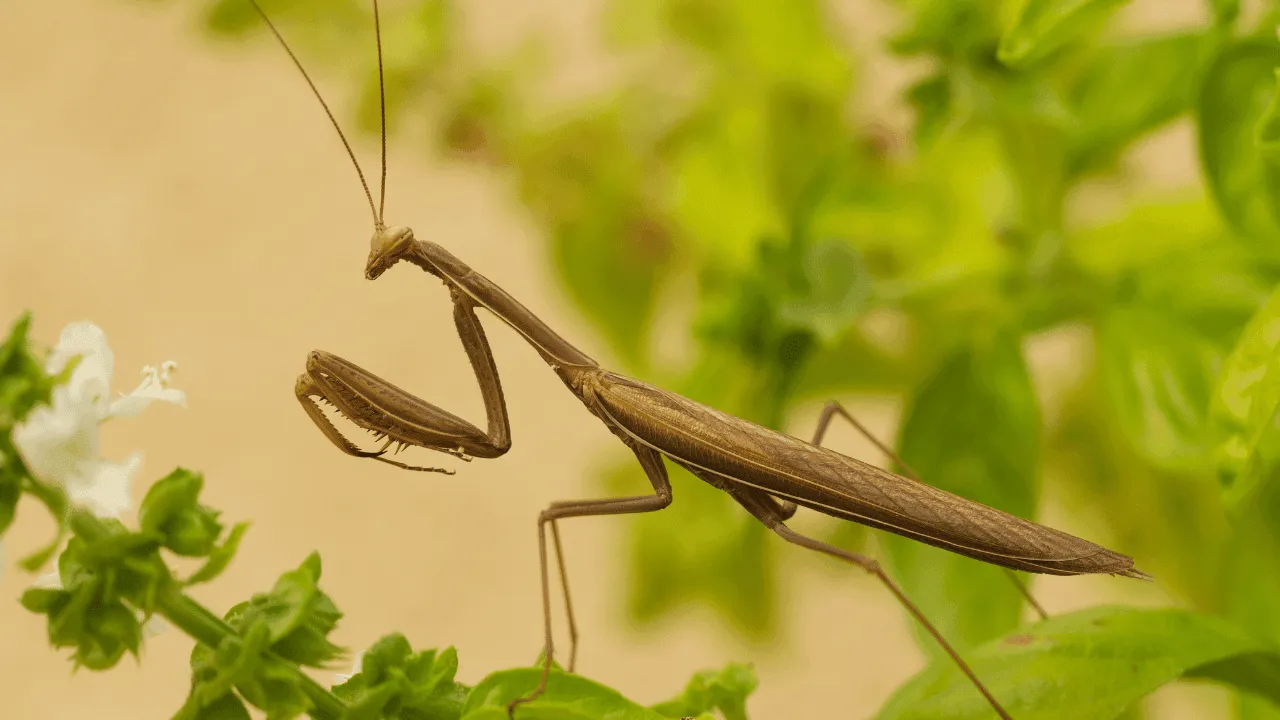
What Does Seeing a Praying Mantis Mean Spiritually? Encountering a mantis can feel like a quiet nudge to slow down. This lanky insect, with its triangular head and folded front legs, often appears from mid-summer to mid-autumn. Many people note its slow, deliberate movements and the way it holds still before striking.
Use practical lenses, not just folklore, when you interpret such moments. A repeated sighting or an out-of-season appearance may be a stronger sign to pause, reflect, and practice patience.
The mantis’ ability to rotate its head and its “praying” pose invite broader perspective and careful timing. Context matters: what you felt or thought at the moment shapes the possible message.
This introduction previews core topics: natural traits, symbolism, cultural meanings, timing and repetition, color cues, dream links, and everyday applications. By the end, readers will find simple ways to apply any insight to life decisions and relationships. For cultural background, see this brief guide from Birds & Blooms.
Key Takeaways
- A mantis sighting can signal stillness before action and focused timing.
- Context—thoughts, feelings, repetition—shapes interpretation.
- Understand natural traits to separate coincidence from meaningful signs.
- Common themes include patience, discernment, and poise.
- Practical tips later in the article help apply insights to daily life.
Understanding the Search Intent: Why people ask, “What Does Seeing a Praying Mantis Mean Spiritually?”
When someone spots this quiet hunter, they often pause to ask if the moment carries deeper meaning. Searchers want clear, practical information that separates natural coincidence from intentional signal.
Many turn to this topic at decision points. A sighting near a choice, during relationship tension, or at work prompts questions about guidance, warning, or encouragement to act with care.
Context matters: the time of day, your mood, and whether you are seeing praying mantis repeatedly all shift the likely interpretation. Morning encounters can suggest proactive action; repeated appearances raise the chance of symbolic relevance.
This guide balances sources. It weaves cultural symbolism, natural history, and modern spiritual perspectives so readers get trustworthy information and practical filters for spotting confirmation bias.
- People search for an actionable message, not vague folklore.
- Users want ways to test if a sighting is meaningful or just nature.
- The guide will later translate signs into steps for timing, boundaries, and clear communication.
Meet the Praying Mantis: Natural traits that shape its symbolism
Study the mantis as a living guide: its body and habits shape much of its symbolic meaning.
Appearance and camouflage: greens, browns, and orchid hues
Most members of this group wear green or brown color that blends with leaves and branches. Some species, like the orchid mantis, show pinkish-white tones that mimic flowers.
Unique abilities: 180-degree head turn, keen vision, and ultrasonic hearing
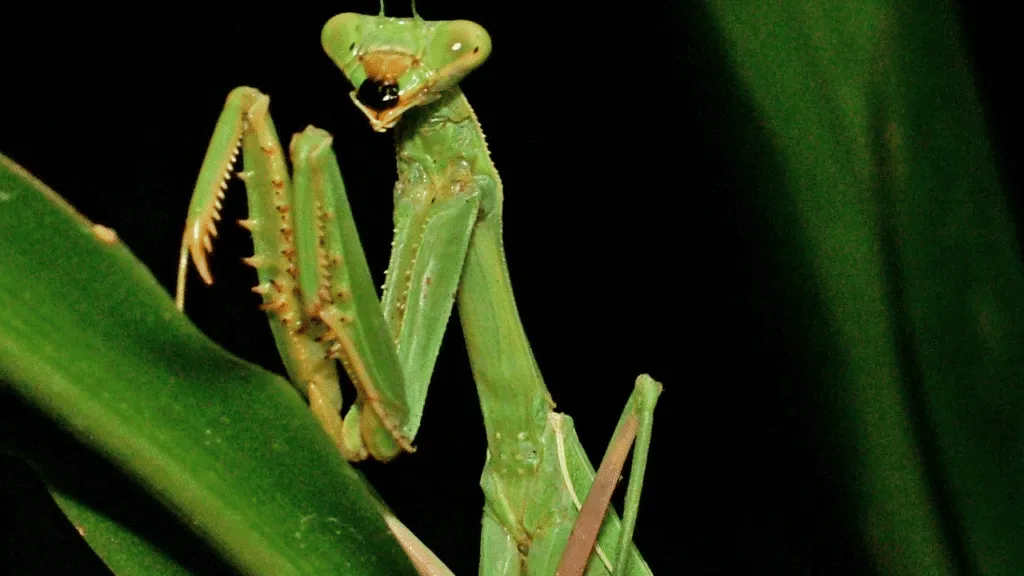
The triangular head and large eyes give great depth perception. Its ability to rotate the head 180 degrees stands out among insects and suggests broad perspective. An ultrasonic organ helps it detect bat echolocation, showing acute sensitivity to subtle cues.
Seasonality and habitats: why mantises are often seen mid-summer to mid-autumn
These ambush predators stay motionless until prey wanders close, then strike with serrated forelegs. You’ll most often spot them from mid-summer to mid-autumn in gardens and warm fields.
Connection to meaning: camouflage reads as discernment, head-turning as perspective, and ultrasound detection as heightened alertness.
- Stealthy creature with precise legs and lightning strikes.
- Feeds on insects and small vertebrate prey.
- Variation by species and habitat adds nuance to any interpretation.
Core spiritual meaning: stillness, patience, focus, and strategic power
Spotting this creature in your space can be a nudge to sharpen focus and conserve energy. In many modern spiritual guides, the encounter invites quiet attention before action and an emphasis on timing over haste.
Patience and stillness: the lesson of timing your move
Patience matters. Like a mantis that waits for prey, you are encouraged to hold steady until conditions favor success.
Focus and strategy: “prayer” hands as hunting precision
The folded forelegs are a hunting pose, not worship. That stance symbolizes intent, precision, and results-driven moves in work and personal goals.
Intuition and psychic insight: tuning in before acting
Intuition is the inner cue to move. Quiet your noise, test facts, then act with economy and clarity.
Female strength and relational dynamics: empowerment versus imbalance
Female behavior in nature can signal both power and warning. It can mirror healthy boundaries or point to unmet needs and manipulation in relationships.
Practice tips:
- Prioritize fewer, higher-impact tasks.
- Conserve energy and strike when advantage is clear.
- Verify claims; avoid smoke and mirrors.
Reflect: Which ability are you asked to refine—patience, focus, or boundary setting for those who prey on your time? This is the practical spiritual meaning of such encounters.
Cultural and historical symbolism around the world
From temples to poetry, this creature appears in traditions that link quiet observation to deeper guidance. People across the world have assigned varied meaning to its still pose and slow motion.
Ancient Greek roots
The Greek word “mantis” means soothsayer. That etymology ties the insect to divination and prophetic guide themes in classical texts.
African reverence
Among the Khoekhoe of Southern Africa, mantises held near-deity status. It was taboo to kill them, showing deep respect for these small creatures.
Religious and regional contrasts
In Christianity and Islam, the folded posture often reads as prayerful blessing or positive omen.
By contrast, Italian and some Japanese folk tales sometimes portray the mantis as a sign of bodily harm or danger.
Arts, martial forms, and indigenous lessons
China’s mantis-inspired Kung Fu teaches precision and patience. Japanese haiku uses the insect as a mindfulness image.
Several Native American teachings link the creature to stillness, listening, and time-tested patience.
- Takeaway: symbolism shifts by culture; the same sight may signal luck or caution.
- Consider ancestry and community when you interpret any omen.
Is seeing a praying mantis good luck or a warning?
An unexpected mantis sighting can feel like either a quiet blessing or a sharp prompt to check your surroundings.
Across faiths and folklore, meanings vary. In Christian and Islamic readings, the folded posture often reads as a positive omen tied to prayer and blessing. In some Italian and Japanese tales, the same stance sometimes warns of bodily harm.
Positive omens: guidance, peace, and good things coming
Many people interpret a close visit as guidance. It can bring calm during a stressful situation and signal good luck or gentle direction.
If the moment feels peaceful, consider it a comforting sign. Journal the feeling, note timing, and treat it as a small blessing you can use to steady choices.
Cautionary angles: manipulation, smoke and mirrors, and discernment
The insect’s predatory stance also reads as a warning for some. Contemporary practitioners advise caution around “smoke and mirrors.” Slow motion can mirror hidden agendas.
“Stay still, watch patterns, then choose one clear move.”
- If the message calms you, lean toward blessing.
- If it raises alarm about hidden agendas, verify facts and set boundaries.
- One sighting may be neutral; repeated visits, odd timing, or a dream raise significance.
Simple steps: journal impressions, check assumptions, and seek calm counsel before reacting. Apply the mantis strategy: observe quietly, watch patterns, then act with one precise choice that fits the meaning you discern.
What Does Seeing a Praying Mantis Mean Spiritually based on timing and repetition

Timing gives context: morning, noon, or night sightings offer distinct cues for next steps. The hour and the pattern often sharpen the message.
Morning, midday, night: how hours change the cue
Morning visits often urge forward motion. A morning praying mantis can hint that now is the moment to start a needed conversation or address a brewing problem.
Midday encounters tend to emphasize focus and execution. If a mantis appears during your work hours, tighten priorities and act with precision.
Night sightings nudge reflection and rest. Evening meetings with the insect can mean integrate lessons, listen to intuition, and prepare for tomorrow.
Repetition and unusual context: when an encounter becomes a clear sign
Repeated or off-season appearances raise the odds this is not random. If you keep seeing praying mantis in strange places or during winter, treat it as a stronger sign to shift perspective.
- Track patterns: log date, time, location, mood, and any related dream to decode relevance for your life.
- Act like the mantis: wait, watch, then make one intentional move that aligns with inner clarity.
- Use timing: morning for planning, midday for focused work, evening for integration.
Color symbolism: does a green or brown mantis change the meaning?
Colors often tune the message. A hue can nudge interpretation toward growth, healing, or steady action. Read color as an accent that clarifies which area of life needs attention.
Green: growth, prosperity, and gentle inner healing
Green mantises usually point to renewal. They suggest emotional repair, peace, and small gains that add up.
Practical cue: favor patience, self-care, and planting seeds for future growth. Green days are for tending relationships and projects.
Brown: grounding, simplicity, and decisive action
Brown mantises bring earth energy. Their tone calls for clearing clutter, setting limits, and taking one clear step.
Decisive moves beat endless planning when brown appears. This color ties the message to the body, chores, or concrete tasks in nature.
- If you see praying mantis in green, focus on inner work and kindness.
- If you see praying mantis in brown, prioritize grounding and execution.
- Quick heuristic: color augments—not replaces—timing, repetition, and your gut sense.
Remember: mantises can shift tones to blend with surroundings, and that camouflage models strategic alignment. Use color cues to choose actions that harmonize with current conditions.
Praying mantis dream meaning: messages from your subconscious

Dream images of this insect often arrive when your mind needs a reminder to slow and steady the pace. Such dreams usually urge balance, inner peace, and a pause before reacting to a tense waking-life situation.
Common dream themes: slow down, balance, and inner peace
Many dreams advise stepping back. Restoring calm gives better perspective and helps you choose one precise move instead of many frantic ones.
Feeling hunted or in danger
If you feel chased or anxious, the dream can mirror real predators in your life—people who take advantage or pressure you. Set clear boundaries and gather facts before you respond.
Dead or killing the mantis
Dreams of a dead insect or killing one often point to disconnection, fear of losing control, or stalled growth. The remedy is careful planning and gradual, intentional action to renew purpose.
“Pause, note the feelings, then choose one clear step.”
- Journal emotions, colors, people, and actions on waking so intuition links symbols to your situation.
- If you feel threatened, assess real-life patterns of predatory behavior and seek support.
- Use measured actions: pause, gather facts, and act with either patience or assertiveness as needed.
For more detail on how such dreams can map to daily choices, see this dream meaning guide.
Applying the mantis message in daily life
A close encounter often marks a crossroads; use it to sort priorities and set one clear next step. Treat the moment as a practical guide. Note which decisions matter most and list essentials before acting.
When it lands on you: poised for a pivotal decision
If a praying mantis lands on you, many read that as a favorable nudge. Clarify the choice at hand, break it into small steps, then move with calm timing.
- Clarify the need and desired outcome.
- List two to three actions; pick one to start.
- Keep energy focused—avoid multitasking.
Finding one at home: tranquility, safety, and abundance
A home sighting often signals peace and protection. Avoid harming mantises; cultivate routines that support stability and small gains in domestic life.
Conflict and communication: act with grace, precision, and patience
Use mantis wisdom in tense talks. Regulate breath, listen closely, then offer one or two clear points.
Movement matters: stillness, deliberate gestures, and steady eye contact increase influence without force.
Micro-habits to build power: daily journaling, brief meditation, and time blocking train focus and precision for real-life choices.
Conclusion
, Consider the mantis as a practical reminder to tune patience into daily action. The core spiritual meaning links focus, timing, and calm judgment. Treat any sighting as gentle information from nature that nudges steady choices.
Natural traits—camouflage, stillness, and sudden strike—translate into a clear sign for decisions and relationships. If you are seeing praying mantis or note dreams, log time, place, and feeling to test relevance.
Cultures vary: some read this insect as blessing, others as caution. Balance that history with your intuition. Small, well-timed moves often make more luck than rushed effort. Integrate mantis wisdom: less noise, more clarity, and one precise step at a time.
FAQ
What does seeing a praying mantis often symbolize in spiritual practice?
Many people interpret an encounter as a prompt to slow down and observe. The insect’s stillness and patient hunting style signal that careful timing, inner calm, and strategic focus may serve you better than impulsive action right now.
Why do people search about this insect as a spiritual sign?
Curiosity about meaning grows when unusual events feel charged. Sightings can feel like meaningful synchronicities, so people seek context—cultural, natural, and psychological—to understand whether the moment points to guidance, warning, or personal reflection.
How do the mantis’s appearance and camouflage influence symbolic meanings?
Its greens, browns, and sometimes floral hues emphasize blending with surroundings. That camouflage becomes a metaphor for discretion, adaptability, and the power of subtle presence rather than loud display.
What unique abilities of the creature shape its spiritual message?
Traits like a 180-degree head rotation, sharp vision, and sensitivity to sound suggest heightened awareness and the need to broaden your perspective before acting. The abilities highlight the value of clarity and prepared attention.
Does seasonality matter when interpreting a sighting?
Yes. Mantises are most visible mid-summer through mid-autumn. A summer sighting may link to growth and harvesting results, while autumn appearances can signal completion, reflection, or readiness to let go.
What are the core symbolic themes tied to the insect?
Key themes include stillness, patience, strategic focus, and inner strength. The “prayer” posture evokes centered intent, and many view the insect as a teacher of timing and deliberate action.
Can the insect represent intuition or psychic insight?
Many spiritual readers say yes. The species’ watchful behavior serves as a metaphor for tuning into subtle signals—trusting gut impressions and waiting for clearer information before making moves.
Is there gender-related symbolism in mantis encounters?
Observers often note female mantises’ reputation for boldness and complex mating behavior. Symbolically this can represent feminine power, independence, or, conversely, caution about imbalance in relationships and dominance dynamics.
How has the insect been viewed across cultures and history?
Views vary widely. Ancient Greeks linked the name to soothsaying. Some African groups revered it as sacred, while other traditions saw it as omen—either protective or unlucky. East Asian arts and Indigenous teachings often emphasize discipline, patience, and warrior-like focus.
Should a sighting be taken as good luck or a warning?
Interpretations depend on context. It can be a positive omen of guidance, peace, and timely opportunity. Alternatively, it may warn to watch for deception, manipulation, or the need to use discernment in a situation.
Does the time of day change the meaning of a sighting?
Yes. Morning encounters may suggest fresh clarity and new beginnings. Midday sightings point to active focus or decision-making. Night or dusk appearances can highlight introspection, hidden influences, or deeper psychic messages.
What does repeated or unusual sighting frequency imply?
Repetition often strengthens the sense of a deliberate message. Multiple encounters or unusual placements can push you to pay attention and consider taking specific action or performing inner work.
Do colors affect symbolic interpretation—green versus brown?
Color cues add nuance. A green specimen commonly links to growth, healing, and prosperity. A brown example suggests grounding, simplicity, and readiness to act with practical resolve.
What does dreaming about the insect usually mean?
Dreams often mirror inner states. Common themes include being urged to slow down, cultivate balance, or restore calm. Dreams where you feel hunted may signal boundary issues or manipulation in waking life.
How should one interpret dreams where the insect is dead or killed?
Such dreams can indicate disconnection from intuition, fear of losing control, or the end of a phase. They may also signal an opportunity for renewal if you’re ready to rebuild trust in your instincts.
What does it mean when the insect lands on you?
A landing often feels intimate and immediate. Spiritually, it can mark a pivotal decision point or signal that the timing is ripe to pause, listen, and choose consciously rather than react automatically.
Finding one inside the home—what message does that carry?
Indoor sightings commonly suggest that calm, safety, or abundance is entering your personal space. It may encourage you to nurture tranquility and protect the peaceful elements in your environment.
How can one apply the insect’s message during conflict or communication?
Use its lessons: remain still long enough to assess, act with precision, and communicate calmly. Patience and measured responses often lead to better outcomes than hurried or aggressive moves.

What Does Yellow Mean Spiritually Yellow is a radiant color with rich spiritual meaning: it commonly symbolizes joy, light, and mental positivity. Spiritually, yellow is linked to the solar plexus chakra and the intellect, and is often associated with self-confidence, creativity, and wisdom. Like any symbol, yellow can have a shadow side too—it may represent anxiety, jealousy, or timidity in some contexts. The color appears across dreams, love, personality profiles, and feng shui practices, and when used intentionally in daily life (for example, wearing a yellow scarf, adding a sunny accent pillow, or spending time in sunlight) it can support feelings of energy, learning, and fresh starts. Read on to explore yellow’s cultural history, dream meanings, role in relationships and personality, and practical feng shui uses.
Key Takeaways:Yellow represents joy, light, and mental positivity.
It symbolizes spontaneity, youthfulness, creativity, and wisdom.
Yellow can hold different symbolic meanings in dreams, love, personality, and feng shui.
Bringing more yellow into your life spiritually—through color, light, or decor—can foster action, learning, and new beginnings.
Yellow is associated with the solar plexus chakra, influencing self-worth, authenticity, and confident expression.Yellow Symbolism in History and Culture
Yellow has played an important role across many cultures, carrying layered symbolic meanings that range from material wealth to spiritual light. In ancient religious and court contexts the color often signified opulence, abundance, and prestige—worn by elites or used in sacred art to signal prosperity and divine favor.
Beyond material associations, yellow has long been linked with joy, clarity, and intellectual energy. Like gold or honey, yellow has suggested abundance and pleasure, while also connoting enlightenment, knowledge, and spiritual illumination in a variety of traditions. These meanings show how a single color can bridge earthly prosperity and inner wisdom.
The Symbolism of Yellow in Different Civilizations
Across civilizations, yellow’s meanings adapted to local beliefs and institutions. Below are representative associations that illustrate its cultural breadth:CivilizationSymbolic Meaning of YellowAncient Egypt
Yellow represented the sun, nourishment, and immortality. It was associated with the god Ra, symbolizing divine power and rebirth.Ancient China
Yellow was considered a prestigious color tied to imperial authority and power; it signified royalty, centrality, and prosperity.Ancient Greece
Yellow was connected with gods such as Apollo, associated with light, healing, creativity, and intellectual pursuits.Ancient Rome
Yellow evoked the sun and vitality — a color linked to life force, triumph, and occasionally to divine figures like Apollo.These historical examples show how yellow can mean both worldly abundance and spiritual illumination depending on context. Today the color still appears in national symbols, religious art, and ceremonial dress—a living thread from ancient meanings of prosperity and wisdom to modern expressions of joy and cultural identity.
What Does Yellow Mean SpirituallyThe symbolism of yellow in dreams is personal but often points to positive mental states or important signals from your subconscious. Bright, vivid yellow hues typically suggest joy, clarity, and creative energy, while muted or muddy yellows can carry caution or unease. To interpret yellow in a dream, note the shade, location, and the feelings you experienced—these details help reveal the spiritual meaning behind the color.
Positivity and Contentment
Vibrant yellow often reflects joy, optimism, and a sense of satisfaction in waking life. If you dream of warm, luminous yellow light or sunlit scenes, it can indicate a period of emotional uplift, renewed hope, or growing happiness.
Intellect and Creativity
Yellow is closely tied to the mind and intellect, so dreaming of yellow can signal new ideas, problem-solving breakthroughs, or creative inspiration. A sudden flash of yellow in a dream might mirror an “aha” moment or heightened mental clarity.
Alertness and Awareness
Because yellow attracts attention, it can represent heightened awareness or a prompt to pay attention. Dreams featuring signs, clothing, or objects in yellow may be asking you to notice details or opportunities you’ve overlooked.
Caution or Warning
Faded, sickly, or muddy yellow shades can suggest caution, anxiety, or feelings of insecurity. In these cases, yellow may be urging you to slow down, examine risks, or address unresolved worries.
Quick journal prompts to interpret your yellow dream: What shade of yellow did you see? Where did it appear? How did it make you feel? For example, dreaming of a bright yellow sunflower in an open field likely points to joy and growth, whereas a dim yellow light in a closed room may signal caution or unease. Note the context, trust your intuition, and use these observations to uncover the spiritual meaning of yellow in your dreams.
Yellow Symbolism in Love
In matters of the heart, yellow often signals excitement, hope, and a sunny outlook on relationships. The color evokes the freshness of new romance—the initial spark, curiosity, and the optimistic energy that comes with seeing the world through new eyes. Because yellow is associated with light and warmth, it can bring an uplifting, joyful tone to love and connection.
Yellow can also represent empowerment and activity in relationships: it suggests an openness to growth, playful communication, and the courage to express feelings. Someone drawn to yellow or perceived to have a yellow aura often projects charisma, confidence, and approachability—traits that naturally attract others.
That said, cultural context matters. For example, yellow roses commonly symbolize friendship and joy in many Western traditions, which makes them a gentle, optimistic choice early in a relationship. But color meanings vary worldwide, so be mindful of local interpretations when gifting or decorating.
How to Use Yellow in Relationships
Try small experiments to see how yellow affects your romantic energy: wear a yellow accessory on a date to boost confidence, place a yellow candle on your dining table to invite warmth, or send yellow flowers to express optimistic intentions. These simple acts can subtly shift mood and invite more light into a partnership.
Yellow in Love: Key TakeawaysYellow symbolizes excitement, hope, and a positive outlook on relationships.
It represents the joy of seeing the world through new eyes and fresh possibilities.
Yellow often signals new, active, and empowering phases in love.
A yellow aura may draw others because of charisma, confidence, and warmth.
Using yellow intentionally—gifts, clothing, decor—can help nurture optimism and connection.Yellow Symbolism in Personality
If you resonate with yellow, it often points to a mind that craves stimulation and variety. In symbolic personality frameworks (not clinical diagnoses), dominant yellow types tend to be logical, curious, and intellectually driven—people who enjoy debate, puzzles, and learning new things.
Those with a yellow aura typically project joy, clear communication, and confidence. They value humor and bright conversation, and they’re often drawn to partners and friends who can match their wit and curiosity. Yellow personalities may excel in fields that reward analytical thought and creativity, such as research, teaching, writing, or scientific work.
The Qualities of a Yellow PersonalityLogical and analytical
Curious and knowledge-seeking
Intellectual and idea-driven
Open-minded and communicative
Positive and charismaticPotential pitfalls include impatience, worry, or overthinking. Simple grounding practices—short mindfulness breaks, time in nature, or steadying breathwork—can restore balance. Quick self-check: do you prefer mental challenges, love sharing ideas, and feel energized by bright, creative projects? If yes to most, you likely identify with many yellow traits.
Yellow Symbolism in Feng Shui
In feng shui, yellow is valued as a bright, stabilizing color that can invite positive energy, prosperity, and mental clarity into the home when used with intention. While results are subjective and depend on belief and context, many practitioners use yellow to activate areas of the space associated with knowledge, relationships, and abundance.
Different Bagua maps and feng shui schools label corners differently; the guidance below follows a common Western Bagua interpretation. Placing yellow accents in the northeast (knowledge & self-cultivation area) supports intellectual growth and inner wisdom. Adding yellow to the southwest (relationship area) can warm the energy of partnerships and encourage connection.
Practical, low-risk ways to introduce yellow into your home: paint a small accent wall, add cushions or a throw in a soft yellow, or use warm yellow lighting (lamps or candles). Use bright or neon yellow sparingly—subtle, warm yellows (mustard, honey) usually promote comfort and balance better than intense shades.
The significance of yellow in feng shui
To harness the spiritual meaning of yellow in your home, set a clear intention for the corner or room before changing decor. Decide whether you want to invite knowledge, create more warmth in relationships, or cultivate prosperity, then choose yellow elements that support that goal.
Try a 7-day yellow experiment: pick one corner (northeast for study/learning or southwest for relationships), add a small yellow item, and journal any shifts in mood, clarity, or connection. Small adjustments and mindful observation help you evaluate whether the color brings the balance and growth you seek.Yellow Symbolism in Feng ShuiSpiritual MeaningSignificanceAttracts good fortune and prosperity
Represents brightness, warmth, and joy
Enhances positive energy and abundancePlacing yellow in the northeast promotes knowledge and self-cultivation
Stimulates intellectual growth and wisdom
Establishes a deeper connection with inner selfIntroducing yellow to the southwest enhances passion and love
Fosters warmth, joy, and romantic connection
Nurtures harmonious relationshipsConclusion
What Does Yellow Mean Spiritually — Yellow carries a warm, uplifting spiritual meaning. It commonly symbolizes joy, optimism, and mental positivity while also representing spontaneity, youthfulness, and creativity. Linked to the solar plexus chakra, yellow often relates to self-confidence, clear communication, and personal power; in symbolic systems it can help people feel more authentic and motivated to act.
Embracing the spiritual meaning of yellow is about inviting more light, clarity, and hopeful energy into daily life. Whether you notice yellow in dreams, in relationships, in personality frameworks, or in the corners of your home, the color tends to uplift, encourage growth, and support transformation. At the same time, be mindful that yellow’s shadow aspects (anxiety, jealousy, timidity) are part of its full meanings—acknowledging both sides creates a balanced approach to its use.
Try one small practice: add a yellow mug to your morning routine, wear a yellow accessory when you want extra confidence, or place a small yellow object in the northeast of your home to invite knowledge and clarity. Observe how these simple acts affect your mood, creativity, and connection with others—then adjust intentionally.FAQWhat Does Yellow Mean Spiritually?
Yellow holds symbolic spiritual meaning across many traditions: joy, light, mental clarity, and optimism. It is commonly associated with the solar plexus chakra, intellect, and self-worth. While yellow often supports confidence and creative energy, it can also signal worry or caution in certain contexts.
What is the symbolism of yellow in history and culture?
Historically, yellow has signified wealth, prestige, and divine light in various cultures—used in royal garments, religious art, and ceremonial objects. It has also symbolized knowledge, enlightenment, and abundance, though specific meanings vary by culture and period.
What is the symbolism of yellow in dreams?
In dreams, bright yellow usually points to positivity, insight, or creative ideas; muted yellow can indicate caution, anxiety, or unresolved concerns. Consider the shade, context, and feelings in the dream to interpret its spiritual message.
What is the symbolism of yellow in love?
Yellow in love often represents hope, excitement, and fresh beginnings. It suggests warmth, playful connection, and an optimistic outlook—though cultural differences (for example, floral meanings) can change how yellow is perceived.
What is the symbolism of yellow in personality?
If yellow resonates with you, it commonly indicates a curious, intellect-oriented temperament—someone energized by ideas, communication, and mental growth. These symbolic personality profiles are frameworks for insight, not clinical diagnoses.
What is the symbolism of yellow in feng shui?
In feng shui practice, yellow can invite prosperity, warmth, and positive energy. Strategic placement—such as adding yellow accents to knowledge or relationship corners—aims to promote growth, balance, and connection, though results are subjective and depend on intention.
What is the spiritual significance of the color yellow?
Overall, yellow’s spiritual significance centers on joy, hope, and mental clarity. It supports creative expression, personal growth, and energetic transformation when used with mindful intent. Incorporating yellow thoughtfully can brighten your life and nurture a sense of purpose and connection....

Rain is more than water falling from the sky — it often functions as a sign of renewal, a bridge between...

Full Moon Insomnia Spiritual Meaning Every full moon, many people notice they can’t sleep — a pattern...

Spiritual Meaning of Green Colors carry layered meanings, and green especially resonates with themes...
Blue Jay Spiritual Meaning Welcome — this guide explores the Blue Jay spiritual meaning and what a sighting...